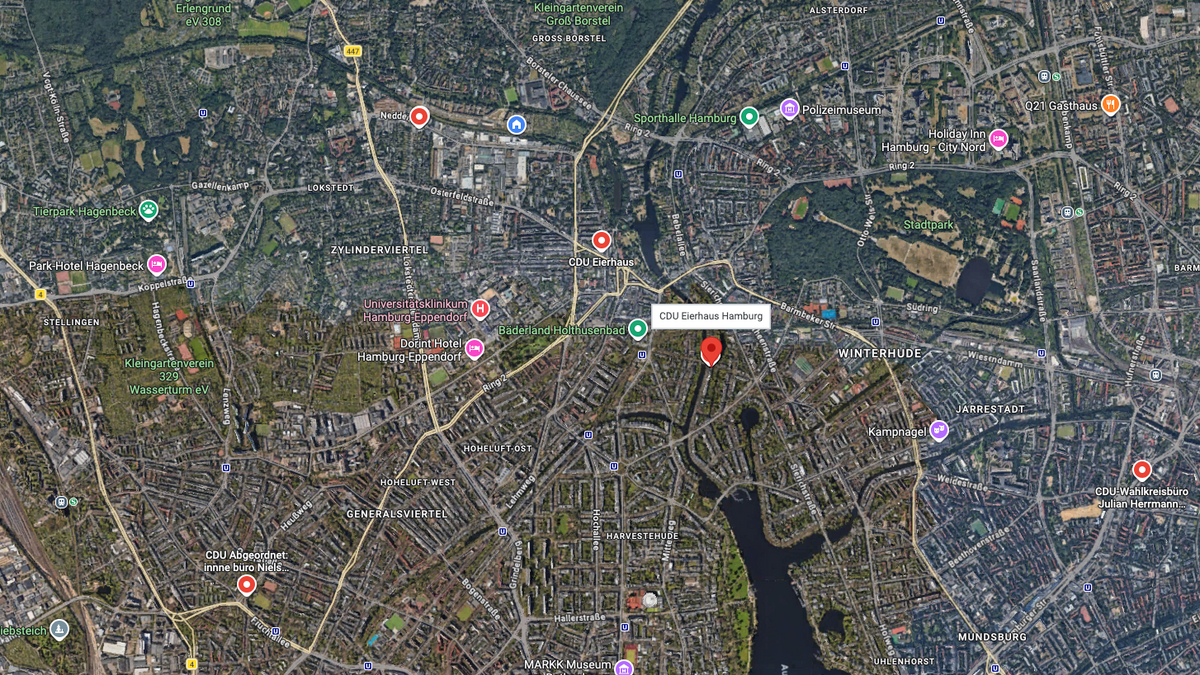
The Curious Case of CDU Eierhaus on Google Maps: Unpacking a Digital Protest
In a bizarre yet captivating turn of events, Germany's political landscape briefly intersected with the digital realm of online mapping, leaving many to ponder the meaning behind unusual changes to the official presence of the Christian Democratic Union (CDU) on Google Maps. Across the nation, from the bustling streets of Berlin to the serene landscapes of Rheinland-Pfalz, CDU party offices and business premises unexpectedly bore new, peculiar names like "Eierhaus" (Egg House), "Eierstelle" (Egg Post), or "Eierladen" (Egg Shop). This widespread digital alteration, now famously known as the CDU Eierhaus Google Maps phenomenon, was far from an innocent glitch; it was a deliberate, coordinated act of digital activism that sent ripples through both political and technological spheres.
The incident highlighted not only the evolving nature of political protest in the digital age but also the inherent vulnerabilities and immense power of user-generated content on platforms like Google Maps. While the CDU's main state association in Mainz acknowledged the incident with a measured response, the underlying motives and orchestrators sparked intense public discussion. This article delves into the specifics of this intriguing episode, exploring its origins, its broader implications, and the valuable lessons it offers for both political entities and digital platform users alike.
When CDU Offices Became "Eierhäuser": The Incident Unfolds
The digital renaming spree began shortly after the Easter holidays, quickly spreading across Germany. What started as isolated incidents soon became a nationwide trend, with multiple CDU and CSU (Christian Social Union) locations on Google Maps displaying the unconventional "Eierhaus" moniker. The scope was significant:
- Rheinland-Pfalz: CDU offices, including their main state association, were temporarily relabeled.
- Berlin and Brandenburg: Numerous party offices in the capital and surrounding state were affected. Examples included "CDU Eierhaus Berlin-Kreuzberg" and "CDU buntes Eierhaus - Landesverband Brandenburg."
- Beyond: Reports confirmed similar entries in Hamburg, Düsseldorf, and other regions, indicating a well-coordinated effort.
The alterations were visible to anyone searching for CDU locations on Google Maps, appearing in search results, on the map itself, and within the pop-up information windows for specific venues. For many, it was a source of bewilderment; for others, a source of amusement. The immediate question on everyone's mind was: What did "Eierhaus" signify, and who was behind this widespread digital prank?
Deciphering the "Eierhaus" Anomaly: A Protest's Digital Echo
While the term "Eierhaus" might evoke innocent images of springtime and Easter, its appearance in this context was anything but random. The incident quickly became linked to a specific, more provocative political protest. According to reports from the German Press Agency (dpa) and various media outlets, the renaming served as a clear allusion to a protest against Friedrich Merz, the federal leader of the CDU and a prominent figure in German politics.
The connection stems from an anti-conscription demonstration held in Berlin earlier in March. During this protest, a young 18-year-old student was seen carrying a placard emblazoned with the provocative slogan "Merz leck Eier" ("Merz lick eggs"). This phrase, a crude German insult, quickly gained notoriety, leading to a police investigation against the student on suspicion of defamation. It is widely believed that the "CDU Eierhaus Google Maps" campaign was a direct and satirical echo of this original protest, transforming a physical street protest into a widespread digital one.
This form of protest is particularly potent because it leverages satire and digital visibility. By altering official listings on a widely used platform like Google Maps, the activists not only drew attention to their message but also disrupted the party's official online representation in a humorous yet undeniably critical way. It highlighted the intersection of youth activism, political dissent, and the powerful, sometimes anarchic, potential of online platforms.
Google Maps and the Dynamics of User-Generated Content
The "CDU Eierhaus Google Maps" incident brought into sharp focus the complex relationship between digital platforms, user contributions, and content moderation. Google Maps, like many modern online services, relies significantly on user-generated content to keep its information current and comprehensive. Features like "report a data or content error" allow anyone to submit corrections or updates regarding business names, addresses, and other details. This crowdsourcing model is incredibly effective for maintaining vast databases but also presents vulnerabilities.
In this case, it appears that a coordinated group of users leveraged these feedback mechanisms to submit false renaming requests for CDU offices. Google's response, when queried by the dpa, reiterated its commitment to accuracy and provided its standard procedure for reporting errors. Indeed, many of the "Eierhaus" entries were eventually reverted to their original names, underscoring Google's active efforts to manage and moderate its platform. However, the temporary success of the campaign highlights a broader challenge:
- Trust vs. Openness: How do platforms balance the desire for open, user-contributed content with the need for verified, accurate information?
- Speed of Moderation: How quickly can platforms react to coordinated misinformation or malicious content, especially when it spreads rapidly?
- Intent vs. Impact: While perhaps intended as a satirical prank, such actions can disrupt an organization's digital presence and potentially influence public perception.
This incident serves as a crucial reminder that while user contributions enrich platforms, they also necessitate robust moderation systems and vigilance from both platform providers and listed entities.
Broader Implications: Digital Activism, Reputation, and Platform Responsibility
The CDU Eierhaus Google Maps affair offers several significant takeaways:
- The Evolving Face of Political Activism: Traditional protests now have digital counterparts. Online "pranks" or coordinated manipulation of digital information can be powerful tools for expressing dissent, garnering attention, and challenging established narratives. This form of "hacktivism" or "culture jamming" is likely to become more prevalent.
- Online Reputation Management is Critical: For any organization, political or commercial, monitoring its digital footprint is no longer optional. The incident underscored how easily an organization's public-facing information can be altered on major platforms, impacting its credibility and public image. Parties like the CDU must now be acutely aware of and proactive in managing their online presence across all digital channels.
- Platform Responsibility and Moderation Challenges: Google, as the custodian of a widely used mapping service, faces continuous challenges in ensuring the accuracy and integrity of its data. The incident highlighted the need for sophisticated algorithms and human moderators to detect and rectify malicious or misleading user submissions promptly. It's a constant arms race between those attempting to manipulate information and those striving to maintain its veracity.
- The Power of Collective Action: Whether one agrees with the method or the message, the "Eierhaus" campaign demonstrated the collective power of numerous individuals acting in concert to achieve a digital objective. This power can be harnessed for good, but also for disruptive or harmful purposes.
The incident transcended a simple renaming; it became a symbol of digital resilience, political satire, and the ongoing tug-of-war for control over online narratives.
Navigating the Digital Landscape: Lessons and Best Practices
For organizations, businesses, and even individuals, the "CDU Eierhaus Google Maps" event offers invaluable lessons in managing their digital presence:
- Proactive Monitoring: Regularly check your listings on major platforms like Google Maps (via Google My Business), Yelp, and others. Set up alerts for changes to your profile.
- Claim and Verify Your Listings: Ensure you have full administrative control over your official listings on all relevant platforms. This allows for quicker intervention if unauthorized changes occur.
- Understand Feedback Mechanisms: Familiarize yourself with how users can report errors or suggest changes on platforms important to you. This knowledge can help you anticipate potential vulnerabilities and understand how to respond.
- Cultivate a Positive Online Presence: A strong, positive digital footprint can help buffer against negative or misleading content. Engage with your audience and manage your online reputation consistently.
- Act Swiftly to Discrepancies: If you detect unauthorized or inappropriate changes to your listings, use the platform's official reporting channels immediately. Document the issue with screenshots and specific details.
- Educate Your Stakeholders: Ensure that your team or members understand the importance of digital presence and the process for reporting issues.
For users, the incident is a reminder of the power and responsibility that comes with contributing to public digital platforms. While exposing genuine errors is beneficial, deliberate manipulation, even if satirical, treads a fine line concerning ethical digital citizenship.
The "CDU Eierhaus Google Maps" phenomenon stands as a quirky yet profound example of how digital spaces are increasingly becoming arenas for political expression and social commentary. It underscores the dynamic nature of online information, the ongoing challenges of content moderation, and the critical importance for all entities to be vigilant and proactive in managing their digital identity in an ever-evolving online world.